The Kalinago People and History
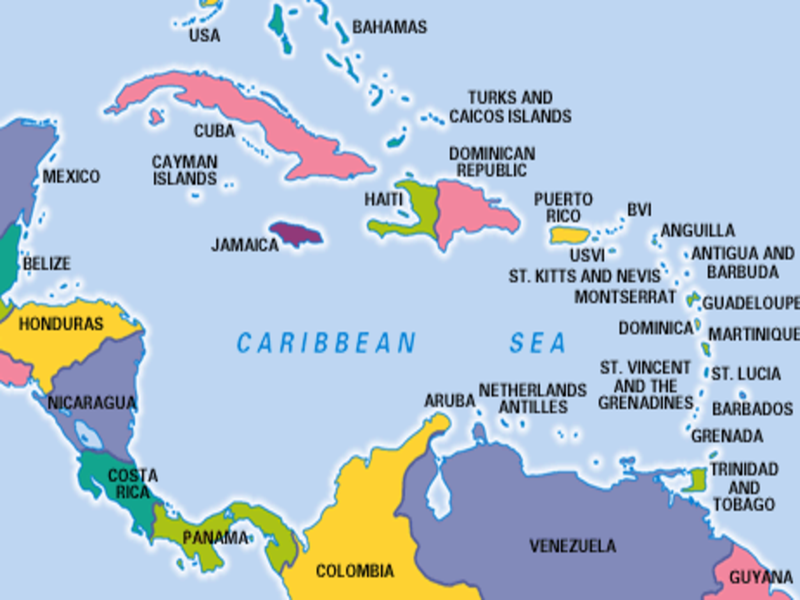
The Kalinago, also called Island Caribs[5] or simply Caribs, are an Indigenous people of the Lesser Antilles in the Caribbean. They may have been related to the Mainland Caribs (Kalina) of South America, but they spoke an unrelated language known as Kalinago or Island Carib. They also spoke a pidgin language associated with the Mainland Caribs.[6]
At the time of Spanish contact, the Kalinago were one of the dominant groups in the Caribbean (the name of which is derived from "Carib", as the Kalinago were once called). They lived throughout north-eastern South America, Trinidad and Tobago, Barbados, the Windward Islands, Dominica, and southern Leeward Islands, including Guadeloupe. Historically, it was thought their ancestors were mainland peoples who had conquered the islands from their previous inhabitants, the Igneri. However, linguistic and archaeological evidence contradicts the notion of a mass emigration and conquest; the Kalinago language appears not to have been Cariban, but like that of their neighbours, the Taíno. Irving Rouse and others suggest that a smaller group of mainland peoples migrated to the islands without displacing their inhabitants, eventually adopting the local language but retaining their traditions of a South American origin.[7]
Recent archaeological research in Grenada has further refined this understanding, suggesting that the "Island Caribs" of the historic period may have been composed of two distinct groups: the "Caraïbe" (likely the long-term indigenous inhabitants who produced Suazan Troumassoid pottery) and the "Galibis" (newer arrivals from the mainland who produced Cayo pottery).[8]
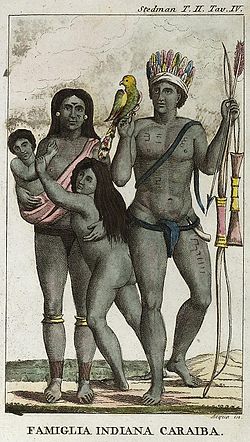
In the early colonial period, the Kalinago had a reputation as warriors who raided neighbouring islands. According to the tales of Spanish conquistadors, the Kalinago were cannibals who regularly ate roasted human flesh.[9] (This is where the word cannibal comes from.) There is no hard evidence of Caribs eating human flesh, though one historian points out it might have been seldomly done as means of taunting or even frightening their Arawak enemies.[10][11] The Kalinago and their descendants continue to live in the Antilles, notably on the island of Dominica. The Garifuna, who share common ancestry with the Kalinago, also live principally in Central America.
Total population |
Regions with significant populations |
Languages |
Religion |
Related ethnic groups |
Saint Vincent and the Grenadines: 3,000[2] Saint Lucia: Small number[3] Trinidad and Tobago: Small number[4] |
Dominica, Saint Lucia, Saint Vincent and the Grenadines, and Trinidad and Tobago; formerly throughout the Lesser Antilles |
English, Dominican Creole French, formerly Island Carib |
The Kalinago language endonyms are Karifuna (singular) and Kalinago (plural).[14][15] The name was officially changed from 'Carib' to 'Kalinago' in Dominica in 2015.[16][17]
Vowels
Consonants
Kalinago has 16 consonants.
Historically, scholars assumed that Island Carib men and women spoke different languages. To explain this phenomenon, scholars proposed that the Island Caribs may have killed the men and kept the women, allowing the Igneri language to survive among women.[50] This assumption arose from the fact that by at least the early 17th century, Carib men spoke a Cariban-based pidgin language in addition to the usual Arawakan language used by both sexes. This was similar to pidgins used by mainland Caribs when communicating with their Arawak neighbours. Berend J. Hoff and Douglas Taylor hypothesised that it dated to the time of the Carib expansion through the islands, and that males maintained it to emphasise their origins on the mainland.[51]
Language
Linguistic analysis in the 20th century determined that the main Island Carib language was spoken by both sexes, and was Arawakan, not Cariban. Scholars adopted more nuanced theories to explain the transition from the earlier Igneri to the later Island Carib societies in the Antilles. Irving Rouse proposed that a relatively small scale Carib force conquered but did not displace the Igneri, and the invaders eventually took on the Igneri language while still maintaining their identity as Caribs.[51] Other scholars such as Sued Badillo doubt there was an invasion at all, proposing that the Igneri adopted the "Carib" identity over time due to their close economic and political relations with the rising mainland Carib polity.[52] Both theories accept that the historical Island Carib language developed from the existing tongue of the islands, and thus it is also known as Igneri.[53]
Religion
The Caribs are believed to have practiced polytheism. As the Spanish began to colonise the Caribbean area, they wanted to convert the natives to Catholicism.[55] The Caribs destroyed a church of Franciscans in Aguada, Puerto Rico and killed five of its members, in 1579.[56]
More information can be found here https://en.wikipedia.org/wiki/Kalinago#:~:text=The%20Kalinago%2C%20also%20called%20Island,Lesser%20Antilles%20in%20the%20Caribbean.
The Carib people originated in the northeastern part of South America near the Orinoco River or modern Venezuela. Migrating northward along the Lesser Antilles, they were known for their abilities as navigators and seafarers, which allowed them to migrate to the Caribbean islands. They have been known for centuries as Caribs, which was a name given to them by European invaders; the Kalinago people eventually adopted this name.
Kalinagos were skilled in fishing and hunting, as well as in agriculture. They cultivated crops, including cassava, corn, and yams. They were a matrilineal society, with family lineage traced through the mother's side of the family, and their social structure was organized into clans. However, the Kalinago people had a balance of power and responsibilities between men and women within their society, with neither gender dominant in social or political matters.
With the arrival of Christopher Columbus in 1492, the Kalinago people came into conflict with European invaders and colonizers. The Spanish labeled the Kalinago people as cannibals due to their fierce and war-like nature, which led to further discord. The colonization of the Caribbean islands by Europeans led to the displacement of the Kalinago people from their ancestral lands. Their population was decimated by enslavement, attacks, and diseases brought by Europeans for which they had no cure.
The remaining Kalinago people today continue to maintain their culture and traditions, including their languages, dance, and music. The Kalinago Territory, the official name of the Kalinago reservation established in 1903 on the island of Dominica, is approximately 3,700 acres in size. The Kalinago reservation, located on the eastern coast of the island, is home to around 3,000 people. They have gained official recognition as the indigenous people of Dominica and are working to preserve their cultural heritage for future generations.
Carib and Arawak People
The Carib and Arawak people are indigenous to the Caribbean region but are two separate groups. The Caribs were known for their fierce and aggressive nature, while the Arawak were a more peaceful group. The Carib people were referred to as cannibals by European colonizers; however, the term cannibal was likely a mistranslation of the Carib word for "to eat," misheard by Europeans who did not understand the language and assumed it was equivalent to the word cannibal. There is also a possibility that claims of cannibalism were simply a justification on the part of invaders who needed a reason to subjugate the indigenous Carib people. The Arawak people were known for being more peaceful and agrarian, but they were also enslaved and subjected to violence by European invaders.
They were skilled seafarers, farmers, warriors and traders connected by canoe routes across the Caribbean Sea.
More information can be found at https://study.com/academy/lesson/carib-history-culture-facts-kalinago-people.html
Kalinago pottery
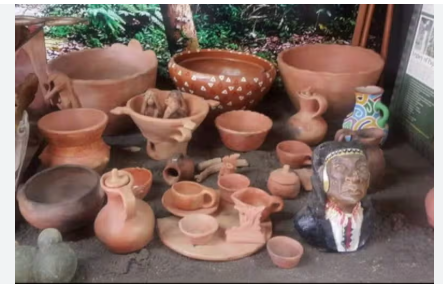
The Kalinago:
Built fast ocean-going canoes
Practiced advanced herbal medicine
Understood astronomy and seasonal cycles
Organized complex societies and warfare strategies
Maintained trade networks across islands
Their resistance to European powers lasted over 200 years, which itself reflects strong political and military intelligence.