Bullying
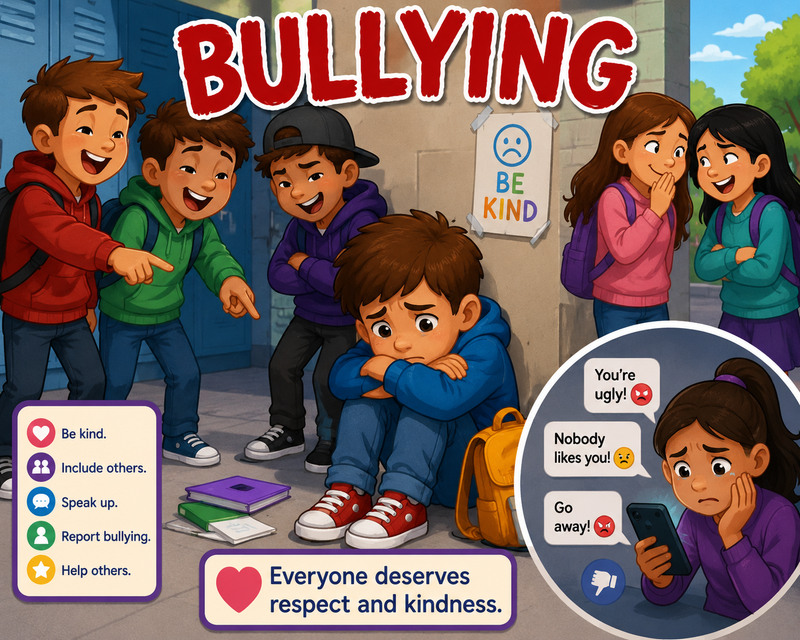
What is Bullying?
Bullying is the repeated, intentional use of words, actions, or behaviors to hurt, intimidate, control, humiliate, or isolate another person. It often involves an imbalance of power, whether physical strength, social status, authority, age, popularity, or access to information.
Bullying is not simply a disagreement or a one-time argument. It becomes bullying when a person repeatedly targets someone with the intent to cause emotional, physical, psychological, or social harm.
Types of Bullying
1. Physical Bullying-This involves causing physical harm or threatening violence.
Some examples include:
- Hitting or punching
- Kicking
- Pushing
- Tripping someone
- Destroying personal belongings
- Taking possessions by force
- Threatening physical harm
2. Verbal Bullying-Using words to hurt another person.
Some examples include:
- Name-calling
- Mocking appearance
- Insults
- Threats
- Constant criticism
- Offensive jokes
- Humiliating comments
3. Social or Relational Bullying-Damaging someone's relationships or reputation.
Some examples include:
- Excluding someone from groups
- Gossiping
- Spreading rumors
- Embarrassing someone publicly
- Turning friends against someone
- Purposely ignoring or isolating someone
4. Cyberbullying-Bullying through technology.
Some examples include:
- Mean text messages
- Online harassment
- Fake social media accounts
- Posting embarrassing photos
- Sharing private information
- Threatening messages
- Public humiliation online
5. Psychological or Emotional Bullying-Manipulating another person's emotions or mental well-being.
Some examples include:
- Intimidation
- Gaslighting
- Constant manipulation
- Silent treatment
- Fear tactics
- Controlling behavior
- Threatening friendships or relationships
How can you identify someone who is being bullied?
Someone may be experiencing bullying if they begin to show changes in behavior such as:
Emotional Signs:-
- Depression
- Anxiety
- Fear of school or work
- Low self-esteem
- Frequent crying
- Mood swings
- Loss of confidence
Physical Signs
- Unexplained injuries
- Torn clothing
- Missing belongings
- Frequent headaches
- Stomach aches
- Trouble sleeping
- Fatigue
Social Signs
- Withdrawal from friends
- Eating alone
- Avoiding activities
- Isolation
- Sudden loss of friendships
Academic or Workplace Signs
- Declining grades
- Reduced productivity
- Increased absences
- Lack of concentration
- Desire to quit
A few quick examples of Bullying:-
- A student is repeatedly mocked every day because of their appearance.
- Someone is excluded from every group activity and others are encouraged not to speak to them.
- A child is threatened with violence if they report abuse.
- A worker is constantly embarrassed by coworkers in front of customers or others.
- Someone repeatedly receives hateful messages online.
- A group records another person being humiliated and uploads the video for entertainment.
Why does bullying happen?
There is no single cause. Bullying usually develops through multiple influences, such as:-
- Desire for Power-Many bullies enjoy feeling dominant over others. They may believe controlling people gives them importance.
- A Learned Behaviour-Children often imitate what they observe. If they witness violence, abuse, ridicule, or intimidation at home, they may begin treating others the same way.
- Insecurity-Ironically, many bullies struggle with deep insecurity. Hurting others temporarily makes them feel stronger or more accepted.
- Peer Pressure-Some individuals bully simply to fit into a group. They fear becoming the next victim.
- Lack of Sympathy-Some have never learned to understand another person's pain. Without compassion, cruelty becomes easier.
- Desire for Attention-Some bully because negative attention feels better than being ignored.
- Jealousy-People may bully someone because they envy their appearance, intelligence, popularity, gifts, or success.
What factors or environment produces bullies?
Although every individual is responsible for their own choices, certain environments can increase the likelihood of bullying behavior.
- Dysfunctional Homes for which some examples include abuse, neglect, constant yelling, domestic violence, lack of discipline, lack of affection.
- Homes without Accountability-Children who never experience healthy correction may believe they can mistreat others without consequences.
- Violent Communities-Exposure to gangs, violence, or crime may normalize aggression.
- Peer groups that reward cruelty-If popularity comes from mocking others, bullying often increases.
- Schools or workplaces that ignore bullying-When leaders fail to address harmful behavior, bullies often become bolder.
- Online Culture-Anonymity can encourage people to say things they would never say face-to-face.
What are some of the effects on the victim of Bullying?
Listing the effects from least severe to the worst possible outcome:-
- Temporary Sadness
- Embarrassment
- Stress
- Anxiety
- Loss of confidence
- Difficulty concentrating
- Poor school or work performance
- Depression
- Panic attacks
- Social withdrawals
- Eating disorders
- Sleep disorders
- Post traumatic stress disorder
- School refusal
- Running away from home
- Long term trust issues
- Chronic emotional trauma
- Substance abuse
- Self harm
What does the bible say about Bullying?
Although this word is not specifically stated, it strongly condemns oppression, cruelty, hatred, violence, mockery, and unjust treatment of others.
Scriptures says we ought to:-
Love one another
John 13:34 A new commandment I give unto you, That ye love one another; as I have loved you, that ye also love one another.
35 By this shall all men know that ye are my disciples, if ye have love one to another.
1John 4:20 If a man say, I love God, and hateth his brother, he is a liar: for he that loveth not his brother whom he hath seen, how can he love God whom he hath not seen?
Romans 12:10 Be kindly affectioned one to another with brotherly love; in honour preferring one another;
Ephesians 4:31 Let all bitterness, and wrath, and anger, and clamour, and evil speaking, be put away from you, with all malice:
32 And be ye kind one to another, tenderhearted, forgiving one another, even as God for Christ's sake hath forgiven you.
Colossians 3:12 Put on therefore, as the elect of God, holy and beloved, bowels of mercies, kindness, humbleness of mind, meekness, longsuffering;
13 Forbearing one another, and forgiving one another, if any man have a quarrel against any: even as Christ forgave you, so also do ye.
Matthew 7:12 Therefore all things whatsoever ye would that men should do to you, do ye even so to them: for this is the law and the prophets.
Oppose Oppression
Proverbs 6:16 These six things doth the Lord hate: yea, seven are an abomination unto him:
17 A proud look, a lying tongue, and hands that shed innocent blood,
18 An heart that deviseth wicked imaginations, feet that be swift in running to mischief,
19 A false witness that speaketh lies, and he that soweth discord among brethren.
Isaiah 1:17 Learn to do well; seek judgment, relieve the oppressed, judge the fatherless, plead for the widow.
What to do if you are being bullied?
- Recognize you are being bullied
- Stay Calm-Bullies often seek a reaction. While this is not always easy, remaining as calm as possible can help you think clearly and reduce the likelihood of the situation escalating.
Take a deep breath, avoid responding with insults or threats, and focus on your safety.
Speak Assertively-Being assertive means standing up for yourself without becoming aggressive. Use a firm and confident voice, say something like, Please stop, I do not appreciate being spoken to that way, Your behaviour is unacceptable or Leave me alone.
Walk away when possible-Not every situation needs to become an argument. If someone is trying to provoke you, leaving the situation may be the safest and wisest response. Walking away is not weakness, it can be a way of protecting yourself.
Tell someone you trust-Do not keep bullying a secret. The sooner someone knows, the sooner support and intervention can begin.
Keep Evidence-If the bullying happens repeatedly, document it. Record the dates, times, locations, what happened and who witnessed it. If there was a video recording or tape recording keep this. Save text messages, emails, social media posts, screenshots, voicemails.
Protect yourself online-If you are being cyberbullied, Block the person when appropriate. Adjust your privacy settings. Avoid responding to abusive messages. Report the behavior to the platform. Tell a trusted adult or supervisor if the harassment continues or includes threats.
Stay connected-Bullies often try to isolate their targets.
Spend time with people who encourage and support you.
Healthy friendships can provide strength, perspective, and practical help.Take care of your mental and emotional health-
Bullying can affect your confidence and well-being. Healthy ways to care for yourself include prayer, reading scriptures/meditating on scriptures, talking with trusted persons, exercise, adequate sleep, healthy eating, speaking with a licensed professional.
Know when to contact the authorities
Learn to defend yourself-Use this for protection and not retaliation. Self defense can help build confidence, improve discipline and self control, increase awareness of surroundings, learning how to de-escalate a situation, escaping dangerous situations safely,
A time for everything
Ecclesiastes 3:1 To every thing there is a season, and a time to every purpose under the heaven:
Ecclesiastes 3:8 A time to love, and a time to hate; a time of war, and a time of peace.
Preserve Life
Proverbs 22:3 A prudent man foreseeth the evil, and hideth himself: but the simple pass on, and are punished
Deuteronomy 30:19 I call heaven and earth to record this day against you, that I have set before you life and death, blessing and cursing: therefore choose life, that both thou and thy seed may live:
20 That thou mayest love the LORD thy God, and that thou mayest obey his voice, and that thou mayest cleave unto him: for he is thy life, and the length of thy days: that thou mayest dwell in the land which the LORD sware unto thy fathers, to Abraham, to Isaac, and to Jacob, to give them.
If someone is being bullied, should I help?
Speak for Those Who Cannot Speak- Proverbs 31:8 Open thy mouth for the dumb in the cause of all such as are appointed to destruction.
9 Open thy mouth, judge righteously, and plead the cause of the poor and needy.
Show Mercy-Matthew 5:7 Blessed are the merciful: for they shall obtain mercy.
Love thy neighbour-Matthew 22:39 And the second is like unto it, Thou shalt love thy neighbour as thyself.
Treat others the way you want to be treated-Luke 6:31 And as ye would that men should do to you, do ye also to them likewise.


