Revolutionaries
Marcus Garvey
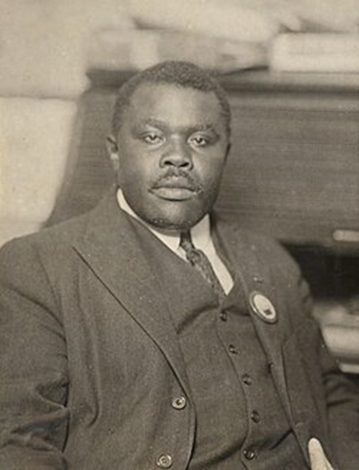
Marcus Mosiah Garvey Jr. was born on 17th August 1887 and died on 10th June 1940. He was a Jamaican political activist, the founder and first President-General of the Universal Negro Improvement Association and African Communities League (UNIA-ACL, commonly known as UNIA) became the largest Black-led movement in history, reaching millions of members across 900 global. Garvey was ideologically a black nationalist and Pan-Africanist. His ideas came to be known as Garveyism. He emphasized unity between Africans and the African diaspora, campaigned for an end to European colonial rule in Africa and advocated the political unification of the continent.
Garveyism rejected the idea that Black people needed external approval to achieve equality, focusing instead on internal development. The core principles of Garveyism were:-
- Racial Uplift: Cultivating deep pride in African heritage and history.
- Self-Reliance: Establishing Black-owned businesses, schools, and cultural institutions.
- Separatism: Advocating for Black people to govern themselves rather than seek integration.
- Pan-Africanism: Uniting all people of African descent under the banner "Africa for the Africans"
The UNIA established the Black Star Line in 1919 to facilitate global trade and passenger travel between Africa, the Caribbean, and the Americas.
Commercial Vision: Garvey intended for the shipping line to prove Black people could successfully operate complex industrial enterprises.
Legal Challenges: The line faced immense pressure from the U.S. government, leading to Garvey’s 1923 mail fraud conviction and eventual 1927 deportation
For more information see link https://en.wikipedia.org/wiki/Marcus_Garvey
Walter Rodney
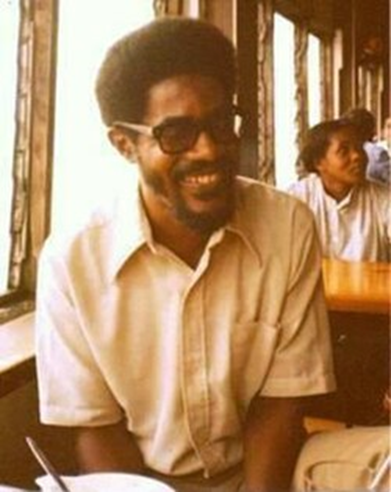
Walter Anthony Rodney born on 23rd March 1942 and died on 13th June 1980. He was a Guyanese historian, political activist and academic. His notable works include How Europe Underdeveloped Africa, first published in 1972. He was assassinated in Georgetown, Guyana, in 1980. He criticized authoritarian governments and colonialism. On 15 October 1968, the government of Jamaica, led by Prime Minister Hugh Shearer, declared Rodney persona non grata. The decision to ban him from ever returning to Jamaica and his subsequent dismissal by the University of the West Indies, Mona, caused protests by students and the poor of West Kingston that escalated into a riot, known as the Rodney riots, resulting in six deaths and causing millions of dollars in damages.[4] The riots, which began on 16 October 1968, triggered an increase in political awareness across the Caribbean, especially among the Afrocentric Rastafarian sector of Jamaica, documented in Rodney's book The Groundings with my Brothers, published by Bogle-L'Ouverture Publications in 1969.
For more information see link https://en.wikipedia.org/wiki/Walter_Rodney and https://blackhistorystudies.com/resources/resources/facts-about-walter-rodney/
Read his books here https://www.mediafire.com/file/r0emz7tcjs7x6xz/How_Europe_Underdeveloped_Africa.pdf/file
https://www.mediafire.com/file/docuthxdpw73pne/The_Groundings_with_my_Brothers.pdf/file
Maurice Bishop
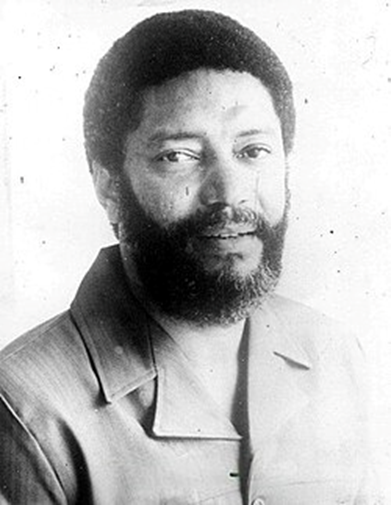
Maurice Rupert Bishop born on 29th May 1944 and died on 19th October 1983. He was a Grenadian revolutionary, politician and the leader of the New JEWEL Movement (NJM), a party that sought to prioritise socio-economic development, education and true black liberation. The NJM came to power on 13 March 1979 and ushered in the Grenada revolution and installed the People's Revolutionary Government which removed Prime Minister Eric Gairy from office. Bishop headed the People's Revolutionary Government of Grenada (PRG) from 1979 to 1983. In October 1983, he was deposed as Prime Minister and executed by firing squad during a coup engineered internally by Deputy Prime Minister Bernard Coard. This quickly led to the demise of the PRG. On 29 May 2009, Grenada's international airport (formerly Point Salines International Airport) was renamed Maurice Bishop International Airport
For more information see link https://en.wikipedia.org/wiki/Maurice_Bishop
Toussaint Louverture
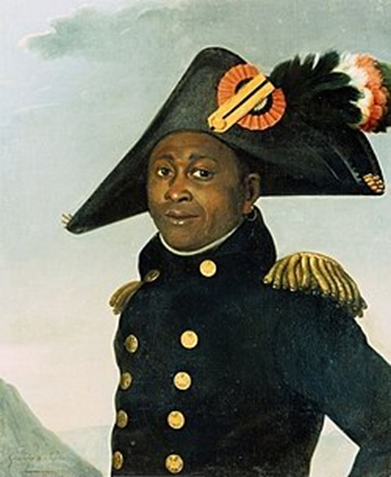
François-Dominique Toussaint Louverture was born 20th May 1743 and died on 7th April 1803. He was also known as Toussaint L'Ouverture or Toussaint Bréda. He was a Haitian general and the most prominent leader of the Haitian Revolution. During his life, Louverture first fought and allied with Spanish forces against Saint-Domingue Royalists, then joined with Republican France, becoming Governor-General-for-life of Saint-Domingue, and lastly fought against Bonaparte's republican troops.[3][4] As a revolutionary leader, Louverture displayed military and political acumen that helped transform the fledgling slave rebellion into a revolutionary movement. Along with Jean-Jacques Dessalines, Louverture is now known as one of the "Fathers of Haiti" and a figure of Haitian mythology, where he was celebrated as a founder of the black nation. Led enslaved people in the Haitian Revolution, helping lay the foundation for the first Black republic. He died in a French prison in 1803 after harsh imprisonment.
For more information see link https://en.wikipedia.org/wiki/Toussaint_Louverture
Jean-Jacques Dessalines
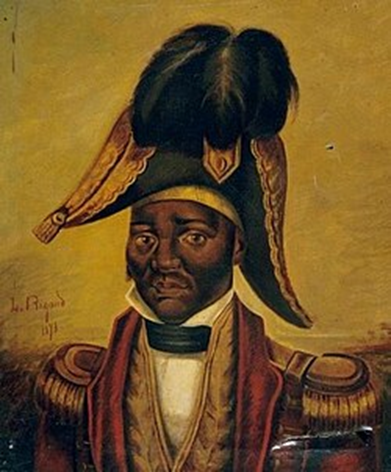
Jean-Jacques Dessalines a Haitian Creole: Jan-Jak Desalin, born on 20th September 1758 and died on 17th October 1806. He was the first Haitian Emperor, leader of the Haitian Revolution, and the first ruler of an independent Haiti under the 1805 constitution. Initially regarded as governor-general, Dessalines was later named Emperor of Haiti as Jacques I (1804–1806) by generals of the Haitian Revolutionary army and ruled in that capacity until being assassinated in 1806.[1] He spearheaded the resistance against French rule of Saint-Domingue, and eventually became the architect of the 1804 massacre of the remaining White French residents of newly independent Haiti.[2] Alongside Toussaint Louverture, he has been referred to as one of the fathers of the nation of Haiti.[3][4] Under the rule of Dessalines, Haiti became the first country in the Americas to permanently abolish slavery. Declared Haiti's independence in 1804 after defeating French forces. He was assassinated in 1806 by political rivals.
For more information see link https://en.wikipedia.org/wiki/Jean-Jacques_Dessalines
Patrice Lumumba
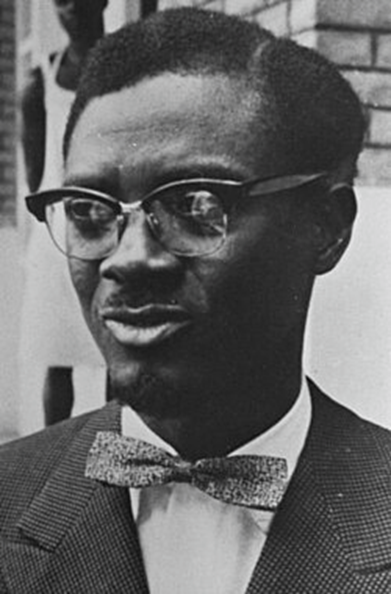
Patrice Émery Lumumba[e] was born Isaïe Tasumbu Tawosa; on 2nd July 1925 and died on 17th January 1961. He was a Congolese politician, independence leader and revolutionary who served as the first prime minister of the First Congolese Republic (modern day Democratic Republic of the Congo) from June until September 1960, following his party's success in the May 1960 election.[5][6] Lumumba was the leader of the Congolese National Movement (MNC) from 1958 until his assassination in 1961. Ideologically an African nationalist and pan-Africanist, he played a significant role in the transformation of the Congo from a colony of Belgium into an independent republic and advocated for true national sovereignty. He was assassinated in 1961 with the involvement of Congolese rivals and foreign interests.
Read his speech here https://www.mediafire.com/file/kt9dnwb2o483yg0/Lumumba_Speaks-_The_Speeches_and_Writings_of_Patrice_Lumumba_1958-1961.pdf/file
Poem from Lumumba, see link https://www.marxists.org/subject/africa/lumumba/xx/poetry/triumph.htm
Source: Patrice Lumumba, The Truth about a Monstrous Crime of the Colonialists, Moscow, Foreign Languages Publishing House, 1961, pp. 48-49.
Written: by Patrice Lumumba;
Transcribed: by Thomas Schmidt.
Weep, O my black beloved brother deep buried in eternal, bestial night.
O you, whose dust simooms and hurricanes have scattered all over the vast earth,
You, by whose hands the pyramids were reared
In memory of royal murderers,
You, rounded up in raids; you, countless times defeated
In all the battles ever won by brutal force;
You, who were taught but one perpetual lesson,
One motto, which was—slavery or death;
You, who lay hidden in impenetrable jungles
And silently succumbed to countless deaths
Under the ugly guise of jungle fever,
Or lurking in the tiger's fatal jaws,
Or in the slow embrace of the morass
That strangled gradually, like the python....
But then, there came a day that brought the while,
More sly, more full of spite than any death.
Your gold he bartered for his worthless beads and baubles,
He raped and fouled your sisters and your wives,
And poisoned with his drink your sons and brothers,
And drove your children down into the holds of ships.
'Twas then the tomtom rolled from village unto village,
And told the people that another foreign slave ship
Had put off on its way to far-off shores
Where God is cotton, where the dollar reigns as King.
There, sentenced to unending, wracking labour,
Toiling from dawn to dusk in the relentless sun,
They taught you in your psalms to glorify
Their Lord, while you yourself were crucified to hymns
That promised bliss in the world of Hereafter,
While you—you begged of them a single boon:
That they should let you live—to live, aye—simply
live. And by a fire your dim, fantastic dreams
Poured out aloud in melancholy strains,
As elemental and as wordless as your anguish.
It happened you would even play, be merry
And dance, in sheer exuberance of spirit:
And then would all the splendour of your manhood,
The sweet desires of youth sound, wild with power,
On strings of brass, in burning tambourines.
And from that mighty music the beginning
Of jazz arose, tempestuous, capricious,
Declaring to the whites in accents loud
That not entirely was the planet theirs.
O Music, it was you permitted us
To lift our face and peer into the eyes
Of future liberty, that would one day be ours.
Then let the shores of mighty rivers bearing on
Their living waves into the radiant future,
O brother mine, be yours!
Let the fierce heat of the relentless middaysun
Burn up your grief!
Let them evaporate in everlasting sunshine,
Those tears shed by your father and your grandsire
Tortured to death upon these mournful fields.
And may our people, free and gay forever,
Live, triumph, thrive in peace in this our Congo,
Here, in the very heart of our great Africa!
For more information see link https://en.wikipedia.org/wiki/Patrice_Lumumba
Thomas Sankara
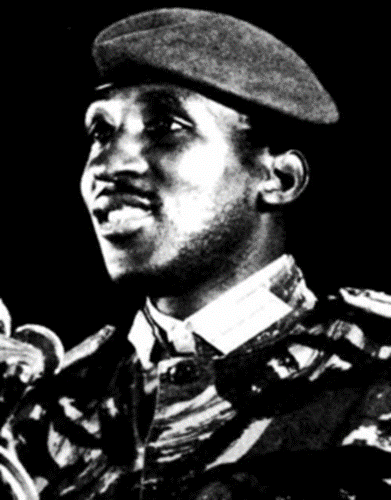
Thomas Isidore Noël Sankara born on 21st December 1949 and died on 15th October 1987. He was a Burkinabé (born in Burkina Faso) military officer, Marxist and Pan-Africanist revolutionary who, following his takeover in a coup, remained in power as the first President of Burkina Faso from 1983 until his assassination in 1987 during a coup. He was also the 5th Prime Minister of Upper Volta from January to May 1983. He promoted anti-imperialism, women's rights, environmental protection, and self-reliance.
For more information see link https://en.wikipedia.org/wiki/Thomas_Sankara
Steve Biko
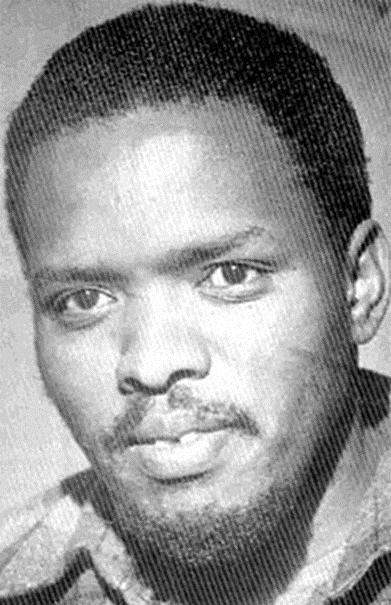
Bantu Stephen Biko OMSG born on 18th December 1946 and died on 12th September 1977) was a South African anti-apartheid activist. Ideologically an African nationalist and African socialist, he was at the forefront of a grassroots anti-apartheid campaign known as the Black Consciousness Movement during the late 1960s and 1970s. His ideas were articulated in a series of articles published under the pseudonym Frank Talk. He founded the Black Consciousness Movement, encouraging psychological and political liberation. He died in police custody in 1977 after being severely beaten.
For more information see link https://en.wikipedia.org/wiki/Steve_Biko
Nelson Mandela
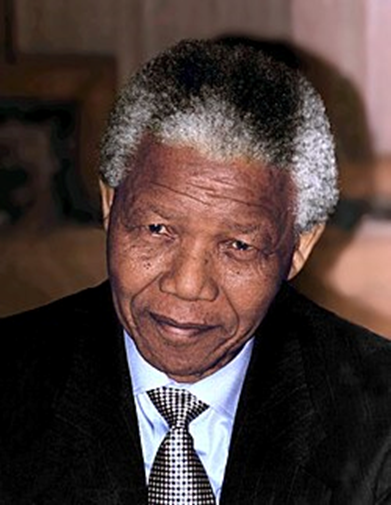
Nelson Rolihlahla Mandela born Rolihlahla Mandela on 18th July 1918 and died on 5th December 2013. He was a South African anti-apartheid activist, statesman, and revolutionary who was the first president of South Africa from 1994 to 1999. He was the country's first Black head of state and the first elected in a fully representative democratic election. Ideologically an African nationalist and socialist. He led the struggle against apartheid, spent 27 years imprisoned, later became South Africa's first Black president.
For more information see link https://en.wikipedia.org/wiki/Nelson_Mandela
Kwame Nkrumah
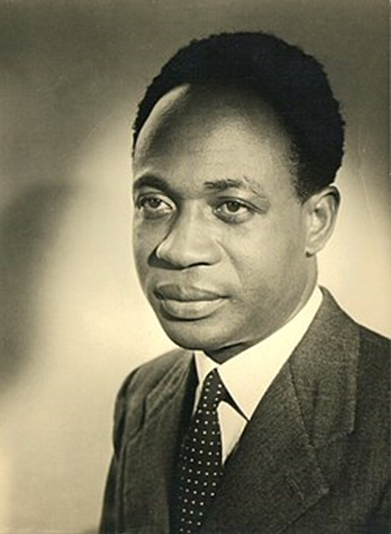
Kwame Kofi Nkrumah born Nwia Kofi Nkrumah, on 21st September 1909 and died on 27th April 1972. He was a Ghanaian politician, political theorist, and revolutionary. He served as Prime Minister of the Gold Coast from 1952 until 1957, when it gained independence from the United Kingdom.[1] He was then the first prime minister and then the president of Ghana, from 1957 until 1966. An influential advocate of Pan-Africanism, Nkrumah was a founding member of the Organisation of African Unity (OAU) and winner of the Lenin Peace Prize from the Soviet Union in 1962. He led Ghana to independence and championed African unity.
For more information see link https://en.wikipedia.org/wiki/Kwame_Nkrumah
Malcolm X
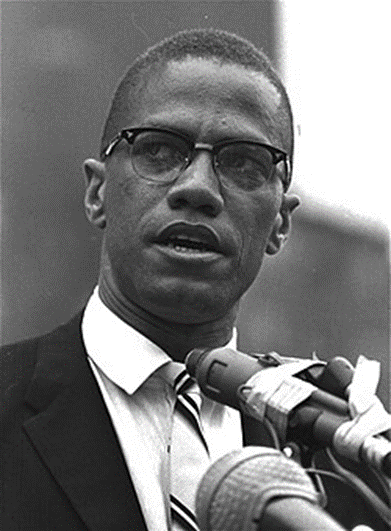
Malcolm X born Malcolm Little, later el-Hajj Malik el-Shabazz on 19th May 1925 and died on 21st February 1965. He was an American civil rights activist and Muslim minister who came from a background of poverty, family disruption, and criminal activity to a prominent figure during the civil rights movement until his assassination in 1965. He discovered the new religious movement the Nation of Islam while in prison and served as its spokesperson from 1952 until he transitioned to Sunni Islam in 1964. He is often regarded as one of the most significant Muslim figures in the United States. A controversial figure accused of preaching violence, Malcolm X is also a celebrated figure with lots of people in the African American community for his pursuit of racial justice. He was assassinated in 1965 while giving a speech.
For more information see link https://en.wikipedia.org/wiki/Malcolm_X
Read some of his speeches here https://www.mediafire.com/file/7togxbkz4q4bsjp/Malcolm-X-speaks-selected-speeches-and-statements.pdf/file
https://www.mediafire.com/file/x7i68jxd2436xhm/The_Ballot_or_the_Bullet.pdf/file
Martin Luther King Jr.
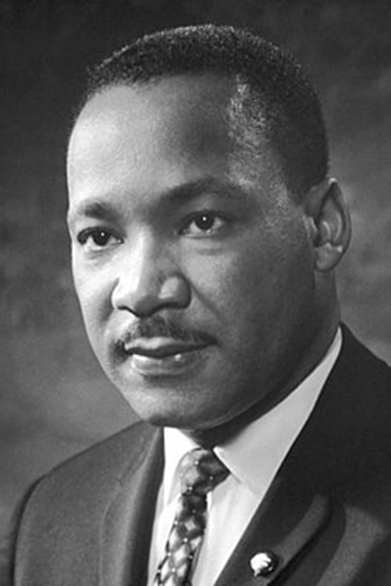
Martin Luther King Jr. born Michael King Jr on 15th January 192 and died 4th April 1968. He was an American civil rights activist and Baptist minister who was a prominent leader of the civil rights movement from 1955 until his assassination in 1968. He advanced civil rights for people of color in the United States through the use of nonviolent resistance and civil disobedience against Jim Crow laws and other forms of legalized discrimination, which most commonly affected African Americans. He led the nonviolent Civil Rights Movement, fighting segregation and voting discrimination. He was assassinated in 1968.
For more information see link https://en.wikipedia.org/wiki/Martin_Luther_King_Jr.
Fred Hampton
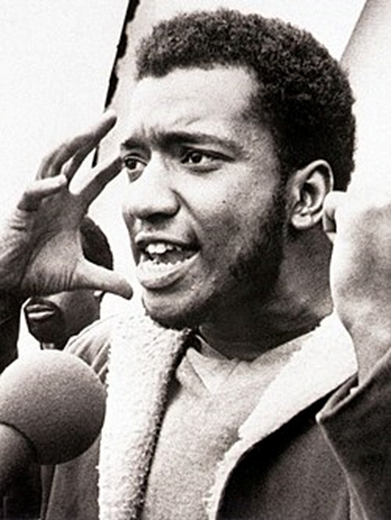
Fredrick Allen Hampton Sr. born on 30th August 1948 and died on 4th December 1969. He was an African-American revolutionary and political activist[4][5] who came to prominence as deputy chairman of the national Black Panther Party and chair of the Illinois chapter from 1966 until his assassination in 1969. He founded the anti-racist, anti-classist Rainbow Coalition,[6] a prominent multicultural political organization that initially included Black Panthers (which organized African Americans), Young Patriots (which organized White Southerners), and the Young Lords (which organized Puerto Ricans), and an alliance among major Chicago street gangs to help them end infighting and work for social change. Hampton was a Marxist–Leninist,[7][8] and he considered fascism the greatest threat to the African American community. He was killed during a police raid in 1969.
For more information see link https://en.wikipedia.org/wiki/Fred_Hampton
Huey P. Newton
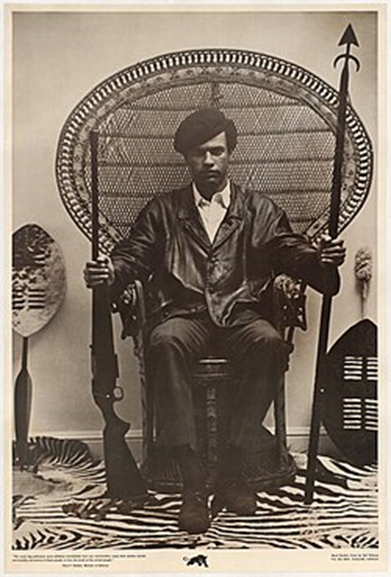
Huey Percy Newton born on 17th February 1942 and died on 22nd August 1989. He was an African American revolutionary and political activist who co-founded the Marxist–Leninist political and militant organization the Black Panther Party (BPP) with fellow activist Bobby Seale in 1966. He ran the party as its main leader and crafted its ten-point manifesto with Seale. Under his leadership, the party organized numerous social programs and community events, advocated for collective defense, and threatened political violence in service of their goals.
For more information see link https://en.wikipedia.org/wiki/Huey_P._Newton
See also https://www.saintsofyahawah.org/history/the-black-panther-party
Amílcar Cabral
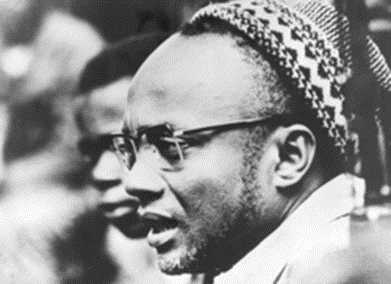
Amílcar Lopes Cabral (Portuguese: [ɐˈmilkaɾ ˈlɔpɨʃ kɐˈbɾal] born on 12th September 1924and died on 20th January 1973. He was a Bissau-Guinean and Cape Verdean agricultural engineer, political organizer, diplomat, and half-brother of Luís Cabral. He was widely remembered as one of Africa's foremost anti-colonial leaders.[1][2] He was also a pan-Africanist and intellectual nationalist revolutionary poet.[3] Also known by the nom de guerre Abel Djassi, he led the nationalist movement of Guinea-Bissau and the Cape Verde Islands and the ensuing war of independence in Guinea-Bissau.
Cabral was assassinated by gunshot on 20th January 1973, about eight months before Guinea-Bissau's unilateral declaration of independence. He was deeply influenced by Marxism, becoming an inspiration to revolutionary socialists and national independence movements worldwide.
For more information see link https://en.wikipedia.org/wiki/Am%C3%ADlcar_Cabral
Frantz Fanon
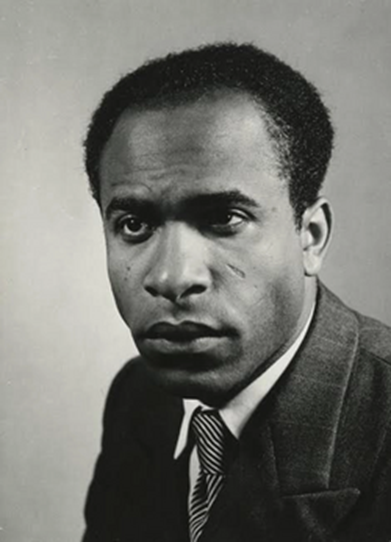
Frantz Omar Fanon (/ˈfænən/,[1] US: /fæˈnɒ̃/;[2] French: [fʁɑ̃ts fanɔ̃] born on 20th July 1925 and died on 6th December 1961. He was a French West Indian[3][4] psychiatrist and political philosopher from the French colony of Martinique (today a French department). His works have become influential in the fields of post-colonial studies and critical theory.[5] As well as being an intellectual, Fanon was a political radical and Pan-Africanist, concerned with the psychopathology of colonization[6] and the human, social, and cultural consequences of decolonization.[7][8][9]
For more information see link https://en.wikipedia.org/wiki/Frantz_Fanon
Makandal Daaga
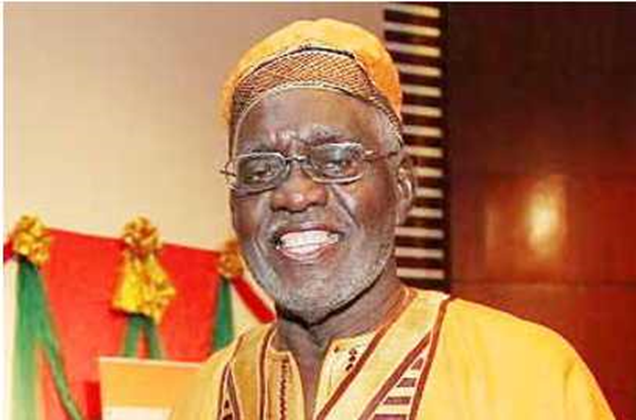
Makandal Daaga born Geddes Granger in Laventille on 13th August 1935 and died on 8th August 2016 led the Black Power Revolution in Trinidad and Tobago. Inspired by Black liberation movements in Africa, the Caribbean, and the United States, he believed that political independence alone had not ended inequality. He founded the National Joint Action Committee (NJAC), which organized large demonstrations in 1970. Tens of thousands of people marched, including university students, workers, and trade unionists.
The movement became so significant that the government declared a State of Emergency and arrested Daaga and other leaders. Although some members of the military later mutinied, Daaga himself advocated organized political action rather than leading an armed uprising.
For more information see link https://en.wikipedia.org/wiki/Makandal_Daaga
C. L. R. James
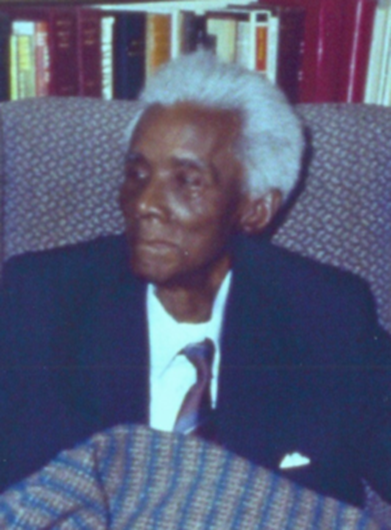
Cyril Lionel Robert James born on 4th January 1901 and died on 31st May 1989. He sometimes wrote under the pen-name J. R. Johnson, was a Trinidadian historian, journalist, Trotskyist activist, and Marxist writer. His works are influential in various theoretical, social, and historiographical contexts. His work is a staple of Marxism, and he figures as a pioneering and influential voice in postcolonial literature.[2] A tireless political activist, James is the author of the 1937 work World Revolution outlining the history of the Communist International, which stirred debate in Trotskyist circles, and in 1938 he wrote on the Haitian Revolution, The Black Jacobins. James showed that enslaved Africans were active agents of liberation rather than passive victims. His work influenced generations of historians, activists, and independence leaders around the world.
Click on the link to start reading https://politicaleducation.org/wp-content/uploads/2017/04/CLR_James_The_Black_Jacobins.pdf
For more information see link https://en.wikipedia.org/wiki/C._L._R._James
Tubal Uriah Butler
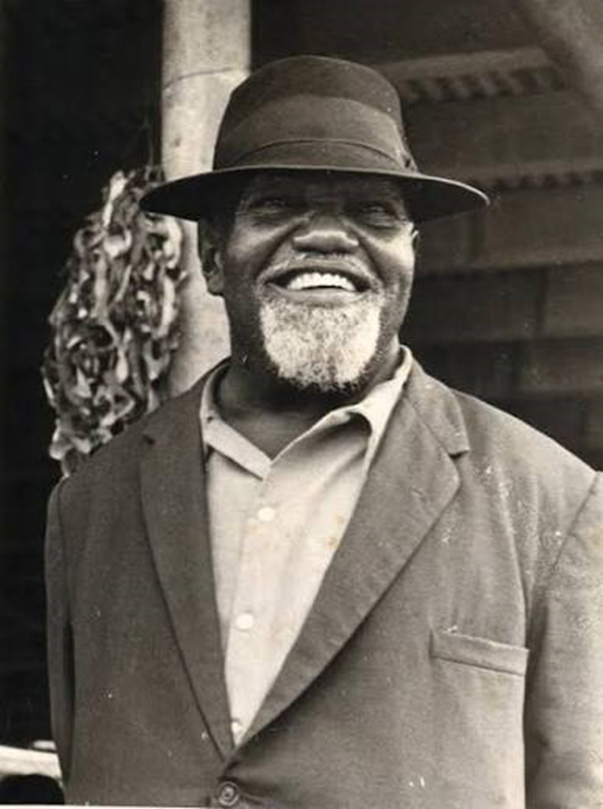
Tubal Uriah "Buzz" Butler born on 21st January 1897 and died on 20th February 1977. He was a Grenadian-born Spiritual Baptist preacher and labour leader in Trinidad and Tobago. He is best known for leading a series of labour riots between 19 June and 6 July 1937 and for forming a series of personalist political parties (the British Empire Citizens' and Workers' Home Rule Party, the Butler Home Rule Party, and finally the Butler Party) that focused its platform on the improvement of the working class. Butler organized workers and led strikes that culminated in the 1937 Trinidad labour riots. The unrest prompted major labour reforms across Trinidad and influenced labour legislation elsewhere in the Caribbean. He demonstrated that workers could organize collectively to challenge colonial authority and employers, helping to lay the foundations of the modern trade union movement.
For more information see link https://en.wikipedia.org/wiki/Tubal_Uriah_Butler
Kwame Ture
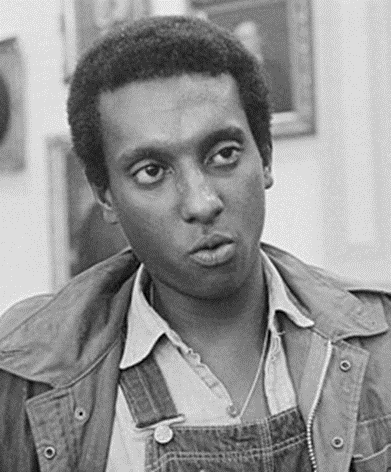
Kwame Ture (/ˈkwɑːmeɪ ˈtʊəreɪ/ KWAH-may TOOR-ay; born Stokely Standiford Churchill Carmichael 29th June 1941 and died on 15th November 1998. He was a Trinidadian and American activist who played a major role in the civil rights movement in the United States and the global pan-African movement. Born in Trinidad and Tobago, he moved to the United States at age 11 and became an activist while attending the Bronx High School of Science. Ture was a key leader in the development of the Black Power movement, first while leading the Student Nonviolent Coordinating Committee (SNCC), then as the "Honorary Prime Minister" of the Black Panther Party and as a leader of the All-African People's Revolutionary Party (A-APRP). FBI director J. Edgar Hoover secretly identified Carmichael as the man most likely to succeed Malcolm X as America's "black messiah.
For more information see link https://en.wikipedia.org/wiki/Stokely_Carmichael
John Berry Meachum
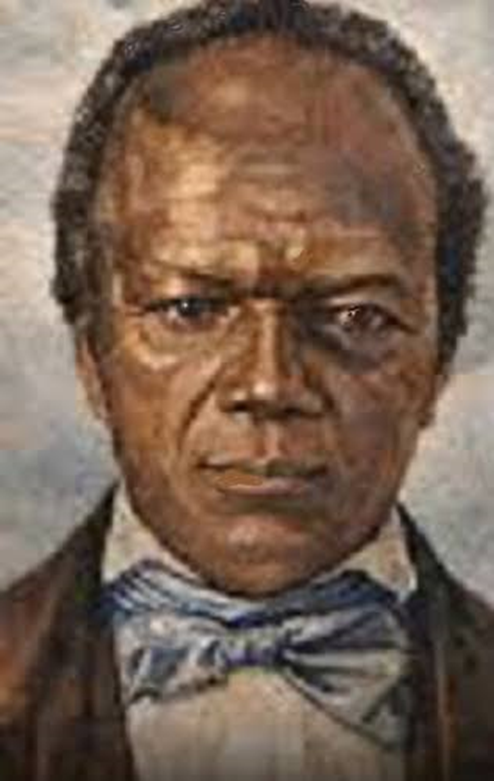
John Berry Meachum born on 3rd May 1789 and died on 26th February 1854. He was an American pastor, businessman, educator and founder of the First African Baptist Church in St. Louis, the oldest black church west of the Mississippi River. He was born into slavery in Virginia. As a young man, he learned trades such as carpentry and cooperage, earned money, and eventually purchased his own freedom. At a time when it was illegal in the city to teach people of color to read and write, Meachum operated a school in the church's basement. Authorities shut down Meachum's school and threatened him with arrest if he continued teaching.
Instead of giving up, Meachum found a creative solution.He bought a steamboat, anchored it in the Mississippi River, and turned it into a classroom with desks, books, and a library. Because the boat was anchored outside Missouri's legal jurisdiction, he argued that the state's education ban did not apply there. Students traveled out to the boat in small rowboats to attend class.
This became known as the Floating Freedom School
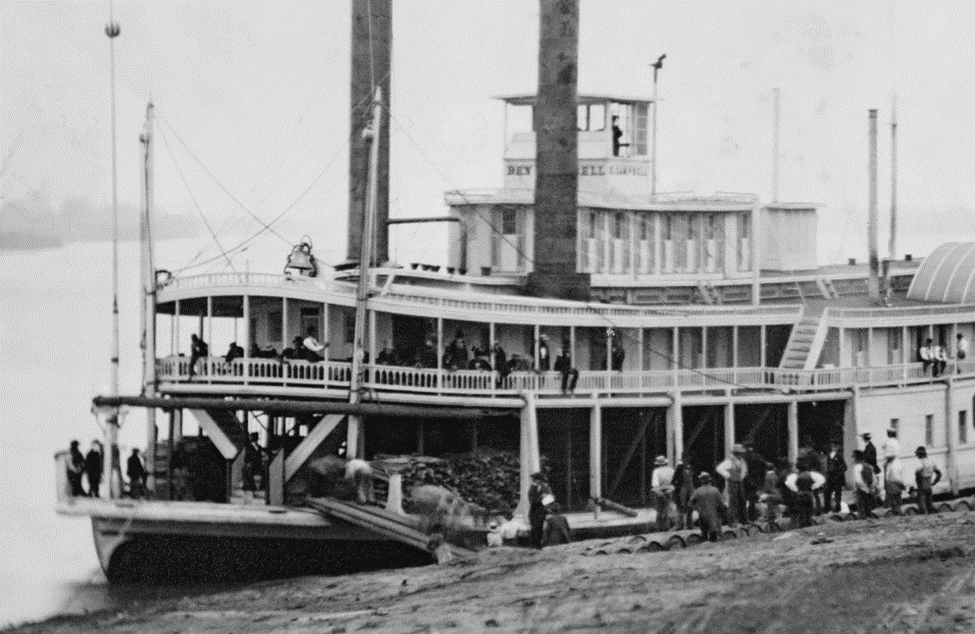
Hundreds of Black children and adults learned to read and write there during the late 1840s and early 1850s. Some of Meachum's students later became teachers themselves, helping expand Black education after the American Civil War.
For more information see link https://en.wikipedia.org/wiki/John_Berry_Meachum
See also https://en.wikipedia.org/wiki/Floating_Freedom_School
Harriet Tubman
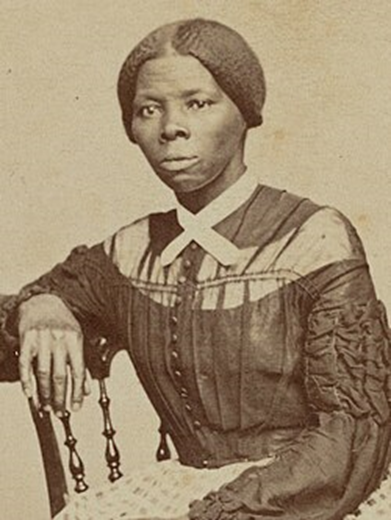
Harriet "Moses" Tubman (born Araminta Ross, c. born in March 1822 and died on 10th March 1913. She was an American abolitionist and social activist.[2][3] After escaping slavery, Tubman made some 13 missions to rescue approximately 70 enslaved people, including her family and friends,[4] using the network of antislavery activists and safe houses known collectively as the Underground Railroad. During the American Civil War, she served as an armed scout and spy for the Union Army. In her later years, Tubman was an activist in the movement for women's suffrage. Born into slavery in Dorchester County, Maryland, Tubman was beaten and whipped by enslavers as a child. Early in life, she suffered a traumatic head wound when an irate overseer threw a heavy metal weight, intending to hit another enslaved person, but hit her instead. The injury caused dizziness, pain, and spells of hypersomnia, which occurred throughout her life. After her injury, Tubman began experiencing strange visions and vivid dreams, which she ascribed to premonitions from God. These experiences, combined with her Methodist upbringing, led her to become devoutly religious. In 1849 Tubman escaped to Philadelphia, only to return to Maryland to rescue her family soon after. Slowly, one group at a time, she brought relatives with her out of the state, guiding dozens of other enslaved people to freedom. Tubman (or "Moses", as she was called) traveled by night and in extreme secrecy, and she later said she "never lost a passenger".[5] After the Fugitive Slave Act of 1850 was passed, she helped guide escapees farther north into British North America (Canada) and helped newly freed people find work. Tubman met John Brown in 1858 and helped him plan and recruit supporters for his 1859 raid on Harpers Ferry.
For more information see link https://en.wikipedia.org/wiki/Harriet_Tubman
Sojourner Truth
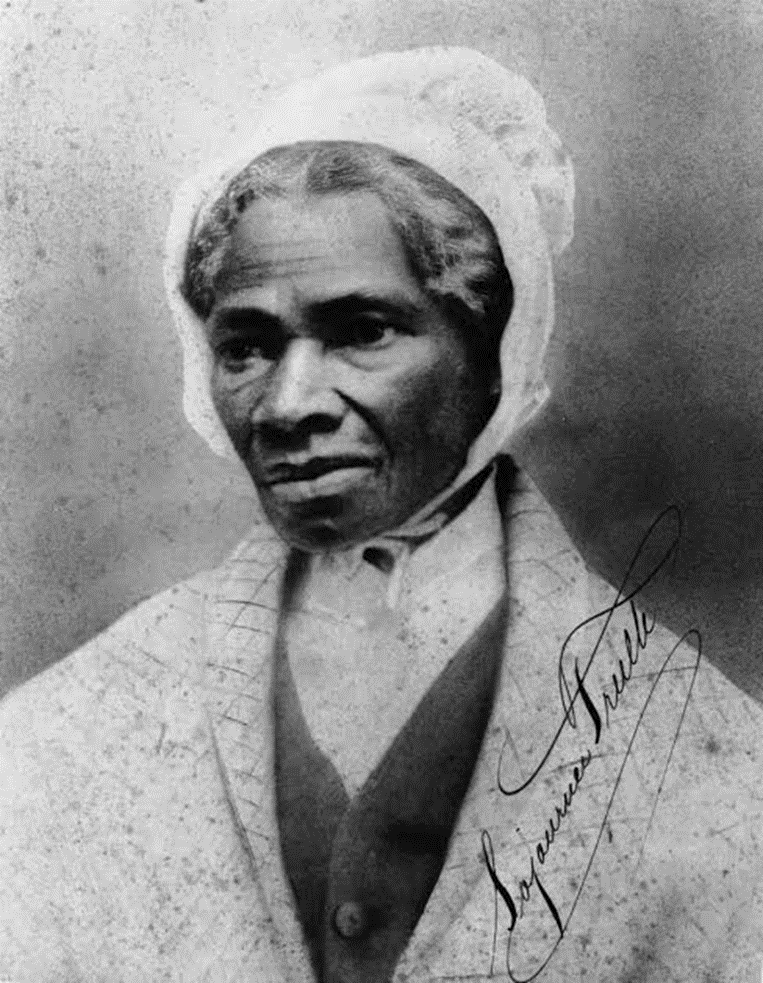
Sojourner Truth (/soʊˈdʒɜːrnər, ˈsoʊdʒɜːrnər/;[1] born Isabella Bomefree; in 1797 and died on 26th November 1883. She was an American abolitionist and activist for African-American civil rights, women's rights, and alcohol temperance.[2] Truth was born into slavery in Swartekill, New York, but escaped with her infant daughter to freedom in 1826. After going to court to recover her son in 1828, she became the first Black woman to win such a case against a white man. Bomefree gave herself the name Sojourner Truth in 1843 after she became convinced that God had called her to leave the city and go into the countryside "testifying to the hope that was in her.
Read her speech here https://awpc.cattcenter.iastate.edu/communication/aint-i-woman-may-291851
For more information see link https://en.wikipedia.org/wiki/Sojourner_Truth
Rosa Parks
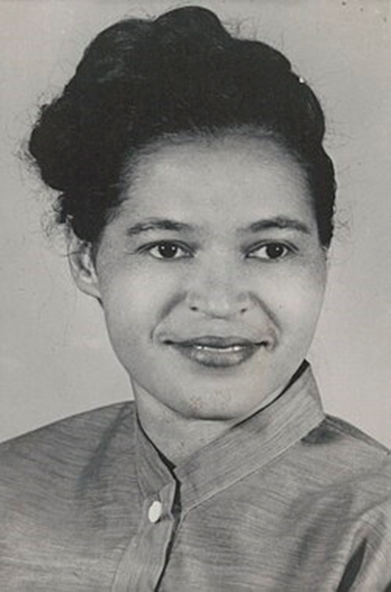
Rosa Louise McCauley Parks born on 4th February 1913 and died on 24th October 2005, She was an American civil rights activist. She is best known for her 1955 refusal to move from her seat on a bus in Montgomery, Alabama, in defiance of Jim Crow racial segregation laws, which sparked the Montgomery bus boycott. She is sometimes known as the "mother of the civil rights movement".Born in Tuskegee, Alabama, Parks grew up under Jim Crow segregation. She later moved to Montgomery and joined the city's chapter of the National Association for the Advancement of Colored People (NAACP) in 1943, serving as the organization's secretary. Despite policies designed to disenfranchise Black citizens, Parks successfully registered to vote after three separate attempts between 1943 and 1945. She investigated cases and organized campaigns around cases of racial and sexual violence in her capacity as NAACP secretary, including those of Recy Taylor and Jeremiah Reeves, laying the groundwork for future civil rights campaigns. She refused to surrender her bus seat in Montgomery in 1955, helping spark the Montgomery Bus Boycott. She had also spent years organizing and investigating racial violence before that event.
Lean more about the Jim Crow laws here https://en.wikipedia.org/wiki/Jim_Crow_laws
For more information see link https://en.wikipedia.org/wiki/Rosa_Parks
Ella Baker
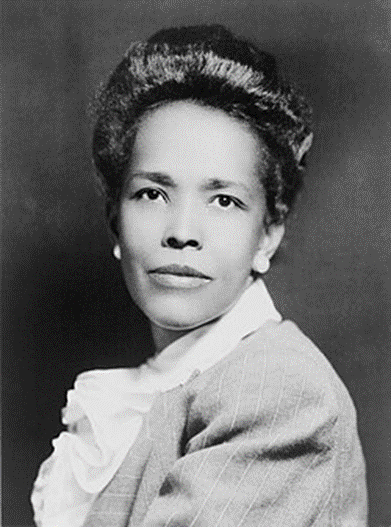
Ella Josephine Baker born on 13th December 1903 and died on 13th December 1986. She was an African-American civil rights and human rights activist. She was a largely behind-the-scenes organizer whose career spanned more than five decades. In New York City and the South, she worked alongside some of the most noted civil rights leaders of the 20th century, including W. E. B. Du Bois, Thurgood Marshall, A. Philip Randolph, and Martin Luther King Jr. She also mentored many emerging activists, such as Diane Nash, Stokely Carmichael, and Bob Moses, as leaders in the Student Nonviolent Coordinating Committee (SNCC).[1][2]
Baker criticized professionalized, charismatic leadership; she promoted grassroots organizing, radical democracy, and the ability of the oppressed to understand their worlds and advocate for themselves.[3] She realized this vision most fully in the 1960s as the primary advisor and strategist of the SNCC.[1][4] Biographer Barbara Ransby calls Baker "one of the most important American leaders of the twentieth century and perhaps the most influential woman in the civil rights movement".[4] She is known for her critiques of both racism in American culture and sexism in the civil rights movement.[5][6][7][8]
For more information see link https://en.wikipedia.org/wiki/Ella_Baker
Fannie Lou Hamer
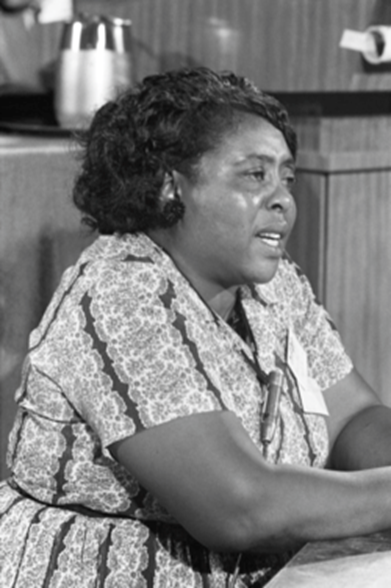
Fannie Lou Hamer (/ˈheɪmər/; née Townsend; October 6, 1917 – March 14, 1977) was an American voting and women's rights activist, community organizer, and leader of the civil rights movement. She was the vice-chair of the Freedom Democratic Party, which she represented at the 1964 Democratic National Convention. Hamer also organized Mississippi's Freedom Summer along with the Student Nonviolent Coordinating Committee (SNCC). She was a co-founder of the National Women's Political Caucus, an organization created to recruit, train, and support women of all races who sought election to government offices.[1]
Hamer began her civil rights activism in 1962, continuing it until her health declined nine years later. She was known for her use of spiritual hymns and biblical quotes, and for her resilience in leading the civil rights movement for black women in Mississippi. She was threatened, harassed, shot at, and assaulted by racists, including members of the police, while she was trying to register to vote. She later helped and encouraged thousands of Black people in Mississippi to become registered voters, and assisted hundreds of disenfranchised people in her area through her work in programs such as the Freedom Farm Cooperative. She ran for the U.S. House in 1964, losing to Jamie Whitten, and she ran for the Mississippi State Senate in 1971. In 1970, she led legal action against the government of Sunflower County, Mississippi, for continued illegal segregation.[2]
For more information see link https://en.wikipedia.org/wiki/Fannie_Lou_Hamer
Assata Shakur
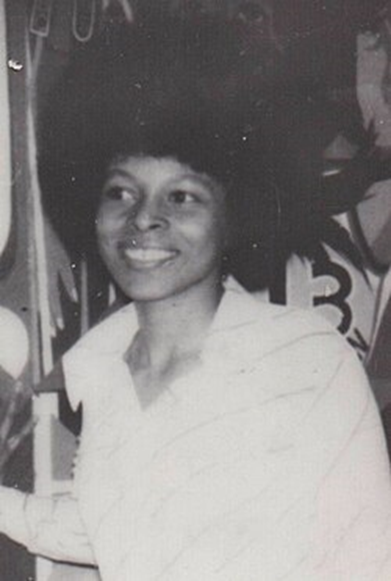
Assata Olugbala Shakur (/əˈsɑːtə ʃəˈkʊər/ ə-SAH-tə shə-KOOR; born JoAnne Deborah Byron, 16th July 1947 and died on 25th September 2025 was an American political activist, revolutionary, and fugitive who was a member of the Black Panther Party, and later the Black Liberation Army.[3] In 1977, she was convicted of the first-degree murder of New Jersey State Trooper Werner Foerster during a shootout on the New Jersey Turnpike in 1973. She escaped from prison in 1979 and was wanted by the FBI, with a $1 million reward for information leading to her capture, and an additional $1 million reward offered by the New Jersey attorney general.[4] She was never caught and remained a fugitive for 45 years.
For more information see link https://en.wikipedia.org/wiki/Assata_Shakur
Claudette Colvin
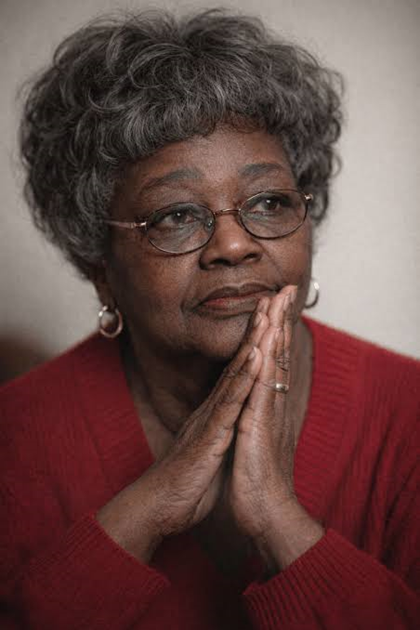
Claudette Colvin (née Austin; born on 5th September 1939 and died on 13th January 2026. She was an American pioneer of the 1950s civil rights movement and nurse aide. On March 2, 1955, she was arrested at the age of 15 in Montgomery, Alabama, for refusing to give up her seat to a white woman on a crowded, segregated bus. It occurred nine months before the similar, more widely known incident in which Rosa Parks, secretary of the local chapter of the National Association for the Advancement of Colored People (NAACP), helped spark the 1955 Montgomery bus boycott.[2] Her case became part of the legal challenge that helped end bus segregation.
For more information see link https://en.wikipedia.org/wiki/Claudette_Colvin
Wangari Maathai
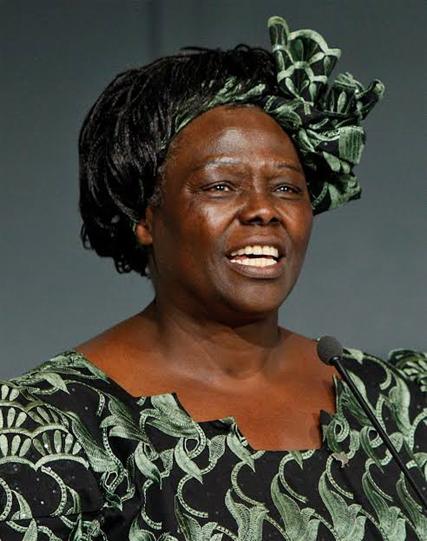
Wangarĩ Maathai (/wænˈɡɑːri mɑːˈðaɪ/; born on 1st April 1940 and died on 25th September 2011. She was a Kenyan social, environmental, and political activist who founded the Green Belt Movement,[2][3] an environmental non-governmental organization focused on planting trees, environmental conservation, and women's rights. In 2004, she became the first African woman to win the Nobel Peace Prize.[4]
For more information see link https://en.wikipedia.org/wiki/Wangar%C4%A9_Maathai
Angela Davis
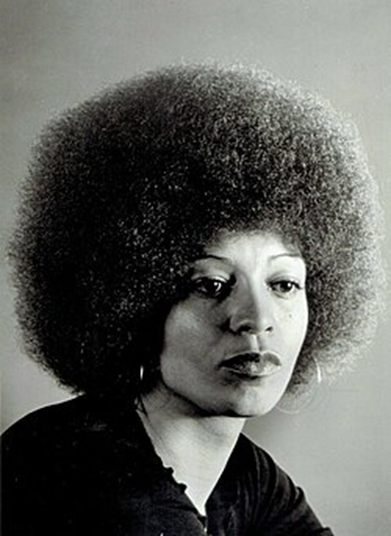
Angela Yvonne Davis born on 26th January 1944 is an American Marxist feminist political activist, philosopher, academic, author and social theorist. She is Distinguished Professor Emerita of Feminist Studies and History of Consciousness at the University of California, Santa Cruz.[3] Davis was a longtime member of the Communist Party USA (CPUSA), running for Vice President in the 1980 and 1984 elections under that party. She is also a founding member of the Committees of Correspondence for Democracy and Socialism (CCDS). She has been active in movements such as the Occupy movement and the Boycott, Divestment and Sanctions campaign.
For more information see link https://en.wikipedia.org/wiki/Angela_Davis
Miriam Makeba
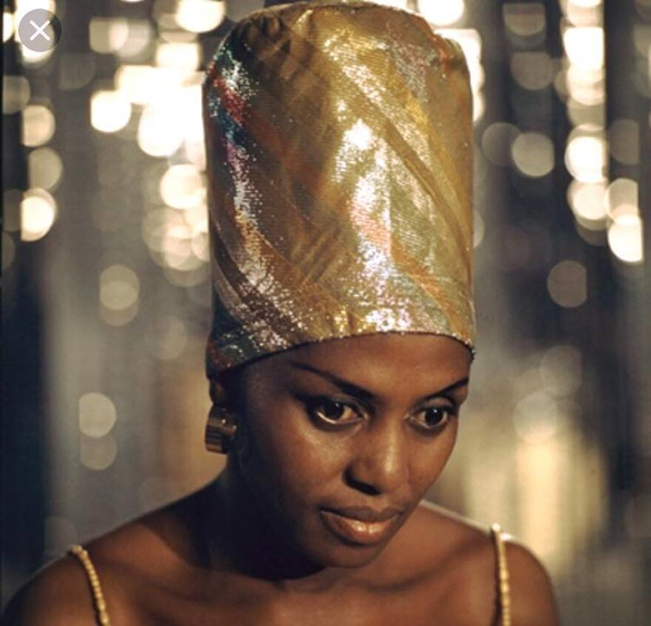
Zenzile Miriam Makeba (/məˈkeɪbə/ mə-KAY-bə,[2][3] Xhosa: [máˈkʼêːɓà̤] ⓘ; 4 March 1932 – 9 November 2008), nicknamed Mama Africa, was a South African singer, songwriter, actress, and civil rights activist. Associated with musical genres including Afropop, jazz, and world music, she was an advocate against apartheid and white-minority government in South Africa.
For more information see link https://en.wikipedia.org/wiki/Miriam_Makeba
Winnie Madikizela-Mandela
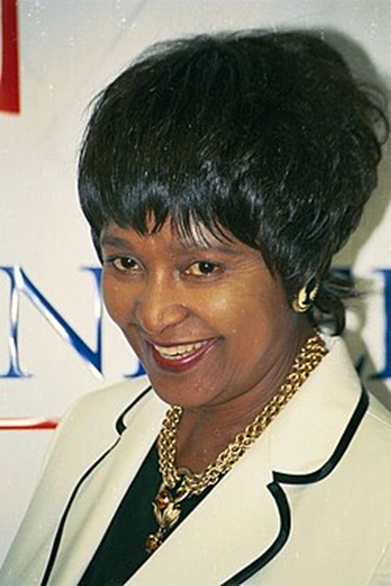
Nomzamo Winifred Zanyiwe Madikizela-Mandela (born Nomzamo Winifred Zanyiwe Madikizela; on 26th September 1936 and died on 2nd April 2018). She was also known as Winnie Mandela, was a South African politician, anti-apartheid activist, and second wife of Nelson Mandela. During her political career, she served as a Member of Parliament from 1994 to 2003,[3] and from 2009 until her death,[4] and was a deputy minister of arts and culture from 1994 to 1996. A member of the African National Congress (ANC) political party, she served on the ANC's National Executive Committee and headed its Women's League. Madikizela-Mandela was known to her supporters as the "Mother of the Nation".[5][6] She also continued resistance while Nelson Mandela was imprisoned, enduring repeated detention and banishment. Her legacy includes both her anti-apartheid activism and later controversies.
For more information see link https://en.wikipedia.org/wiki/Winnie_Mandela
Nanny of the Maroons
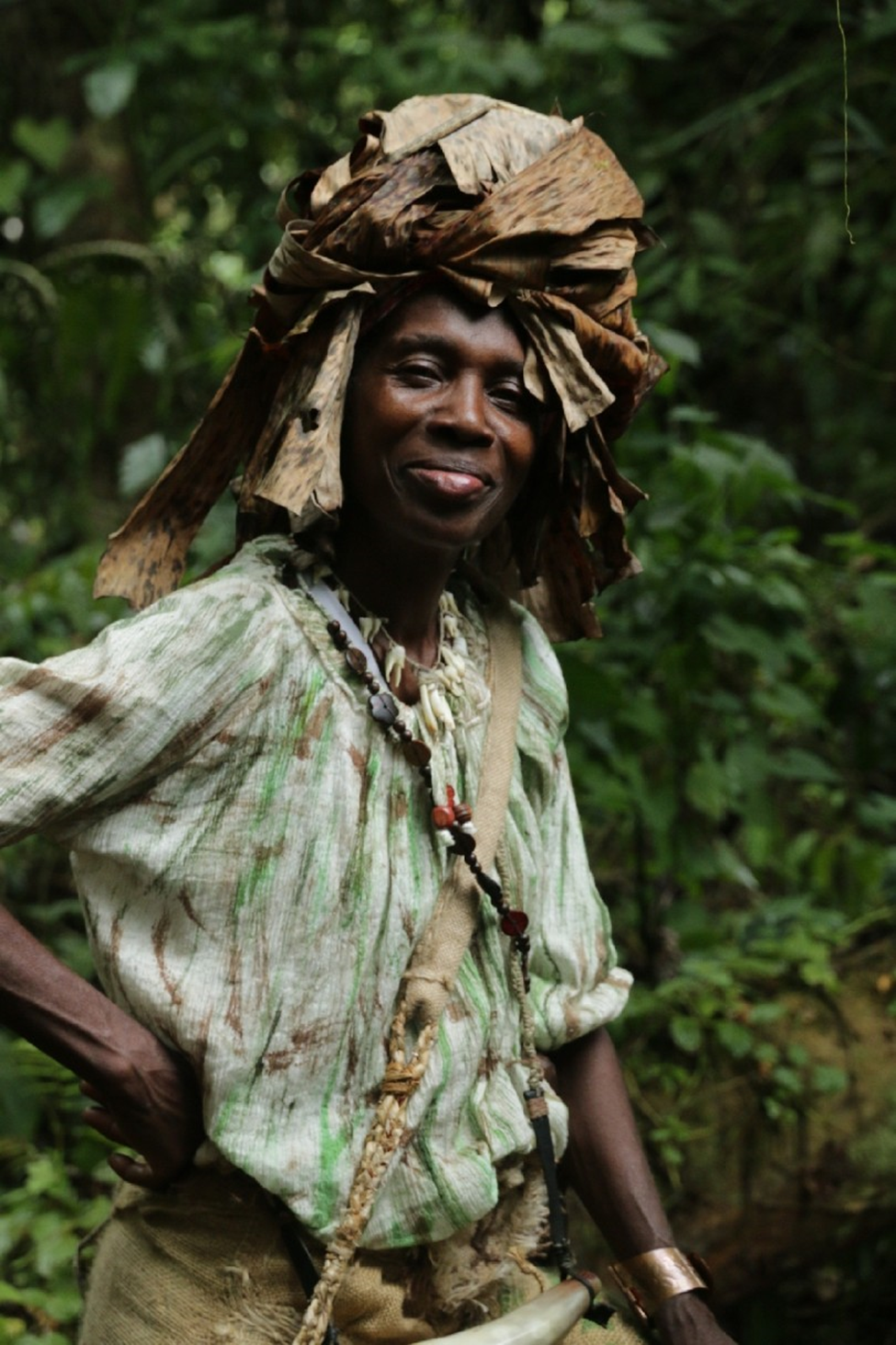
Nanny of the Maroons ONH (c. 1686 – c. 1760), also known as Queen Nanny and Granny Nanny, was a Jamaican revolutionary and leader of the Jamaican Maroons. She led a community of formerly-enslaved escapees, the majority of them West African in descent, called the Windward Maroons, along with their children and families.[1] At the beginning of the 18th century, under the leadership of Nanny, the Windward Maroons fought a guerrilla war lasting many years against British authorities in the Colony of Jamaica, in what became known as the First Maroon War. Maroons attributed their success against the British to the successful use of supernatural powers by Nanny, while historians believe that the Maroons' mastery of guerrilla warfare and vast knowledge of the natural terrain played a significant role in their successes. Having failed to defeat them on the battlefield, the British sued the Maroons for peace, signing a treaty with them on 20 April 1740.[3] The treaty stopped the hostilities, provided state-sanctioned freedom for the Maroons, and granted 500 acres (202 ha) of land to Nanny and her followers. The village built through that land grant still stands, and is called Moore Town or the "New" Nanny Town. Modern members of Moore Town celebrate 20 April 1740 as a holiday, known informally in places today as "4/20" or "four-twenty".
In 1975, the government of Jamaica declared Nanny their only female national hero by celebrating her success as a leader.[4] Her image is printed on the Jamaican $500 note, which is referred to as a "Nanny".
Who were the Maroons?
The maroons are descendants of West Africans, mainly people from the Akan. They were known as Coromantie or Koromantee, and were considered ferocious fighters.[6] A number of the enslaved originated from other regions of Africa, including Nigeria, the Congo and Madagascar. However, at least half of the enslaved African people in Jamaica during the early English colonisation of the island were also Asante in origin, as shown in maternal genetics, linguistics and cultural evidence.[9][10]
After being brought to Jamaica in the course of the Transatlantic slave trade, many enslaved Africans fled from the oppressive conditions of plantations and formed their own communities of free black people in Jamaica in the rugged, hilly interior of the island. People who escaped from slavery joined these Maroon communities in the mountains of eastern Jamaica, or the Cockpit Country in the west of the island.[6] Up to the 1650s under Spanish rule, enslaved Africans escaped and intermarried with the native islanders, the Taíno or Arawak, in their communities in the Blue Mountains (Jamaica), located in Portland Parish and Saint Thomas Parish, Jamaica, in the eastern end of the island.[11][12]
Many Maroons were escaped slaves, who ran away from their Spanish-owned plantations when the British took the Caribbean island of Jamaica from Spain in 1655. However, many modern-day Maroons believe that The Maroons of Nanny Town belonged to a separate group that existed in the Mountains prior to 1655. They state that Queen Nanny's Maroons date back to the Tainos fleeing to the Blue Mountains when the Spaniards first arrived in Jamaica. Maroon oral history maintains that her family arrived in 1640 and joined the existing Maroons, whose community allegedly existed about 150 years before the Spanish fled Jamaica.[13]
For more information see link https://en.wikipedia.org/wiki/Nanny_of_the_Maroons
Queen Mary Thomas
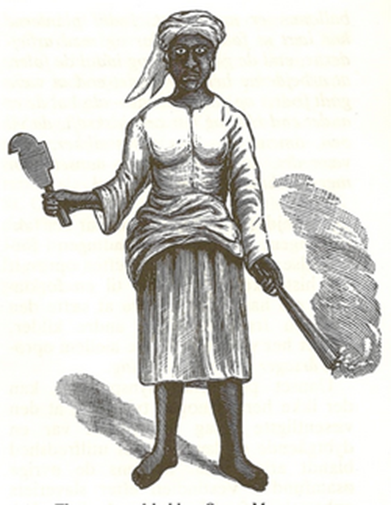
Mary Thomas, known as Queen Mary born in 1848 and died 1905. She was one of the leaders of the 1878 "Fireburn" labor riot, or uprising, on the island of St. Croix in the Danish West Indies. Mary Thomas was from Antigua and arrived in St. Croix in the 1860s to take work on the plantations in the island. In 1878 she resided at the Sprat Hall plantation.[1] She had three children but never married.[2] Before the uprising, she had been sentenced for theft and for mistreating her children.[2][3][4] Historians have suggested that such sentences were used by the authorities to discredit people who opposed them. Thomas obtained semi-mythical status in the Virgin Islands oral tradition, where a popular song commemorates her actions in the uprising:
Queen Mary, ah where you gon' go burn?
Queen Mary, ah where you gon' go burn?
Don' ask me nothin' t'all
Just geh me de match an oil
Bassin Jailhouse, ah deh de money dey[7]
The Queen Mary Highway on St. Croix is named after her.
For more information see link https://en.wikipedia.org/wiki/Mary_Thomas_(labor_leader)
Yaa Asantewaa
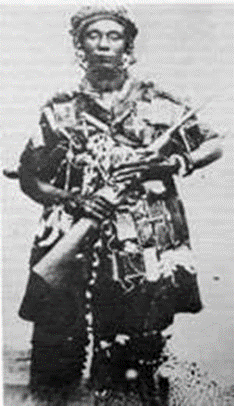
Yaa Asantewaa I born in 1840 and died on 17th October 1921. She was the Queen Mother of Ejisu in the Ashanti Empire, now part of modern-day Ghana. She was appointed by her brother Nana Akwasi Afrane Okese, the Edwesuhene, or ruler, of Edwesu. In 1900, she led the Ashanti war also known as the War of the Golden Stool, or the Yaa Asantewaa War of Independence, against the British Empire.[1] She died in exile in 1921.
For more information see link https://en.wikipedia.org/wiki/Yaa_Asantewaa
Dandara dos Palmares
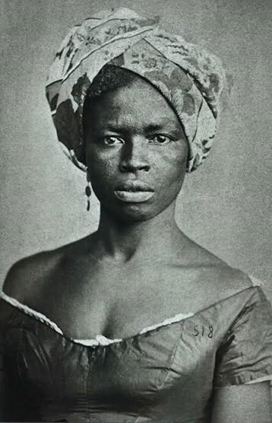
Dandara (Portuguese: Dandara dos Palmares) (1654 – February 6, 1694 CE) was an Afro-Brazilian warrior of the colonial period of Brazil and was part of the Quilombo dos Palmares, a settlement of Afro-Brazilian people who freed themselves from enslavement, in the present-day state of Alagoas.[1][2] After being arrested on February 6, 1694, she committed suicide, refusing to return to a life of slavery. Not much is known about her life. Most of the stories about her are varied and disconnected.[3] She and her husband Zumbi dos Palmares, the last king of the Quilombo dos Palmares, had three children.
For more information see link https://en.wikipedia.org/wiki/Dandara_dos_Palmares
Claudia Jones
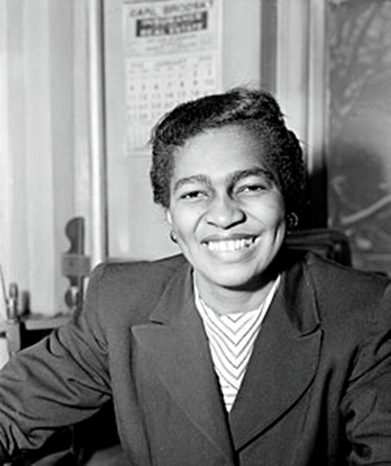
Claudia Vera Jones (née Cumberbatch born on 21st February 1915 and died on 24th December 1964). She was a Trinidad and Tobago-born journalist and activist. As a child, she migrated with her family to the United States, where she became a Communist political activist, feminist and Black nationalist, adopting the name Jones as "self-protective disinformation".[1] Due to the political persecution of Communists in the US, she was deported in 1955 and subsequently lived in the United Kingdom. Upon arriving in the UK, she immediately joined the Communist Party of Great Britain and would remain a member for the rest of her life. In 1958, she founded Britain's first major Black newspaper, the West Indian Gazette (1958-1965).
For more information see link https://en.wikipedia.org/wiki/Claudia_Jones
Elma Francois
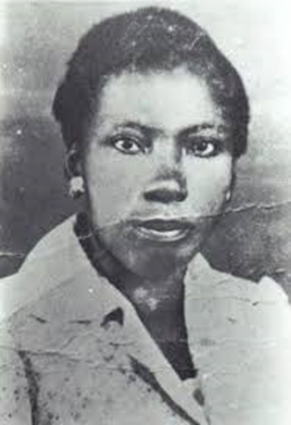
Elma Francois born on 14th October 1897 and died on 17th April 1944) was an Africentric Socialist political activist who, on 14 October 1987, was declared as a "national heroine of Trinidad and Tobago".[1] She had been described as one of the "vociferous Africentric activists" in the history of Trinidad and Tobago and in the Caribbean region.[1] She was known for her pro-trade union, anti-war and anti-colonial work.[2]
For more information see link https://en.wikipedia.org/wiki/Elma_Francois